
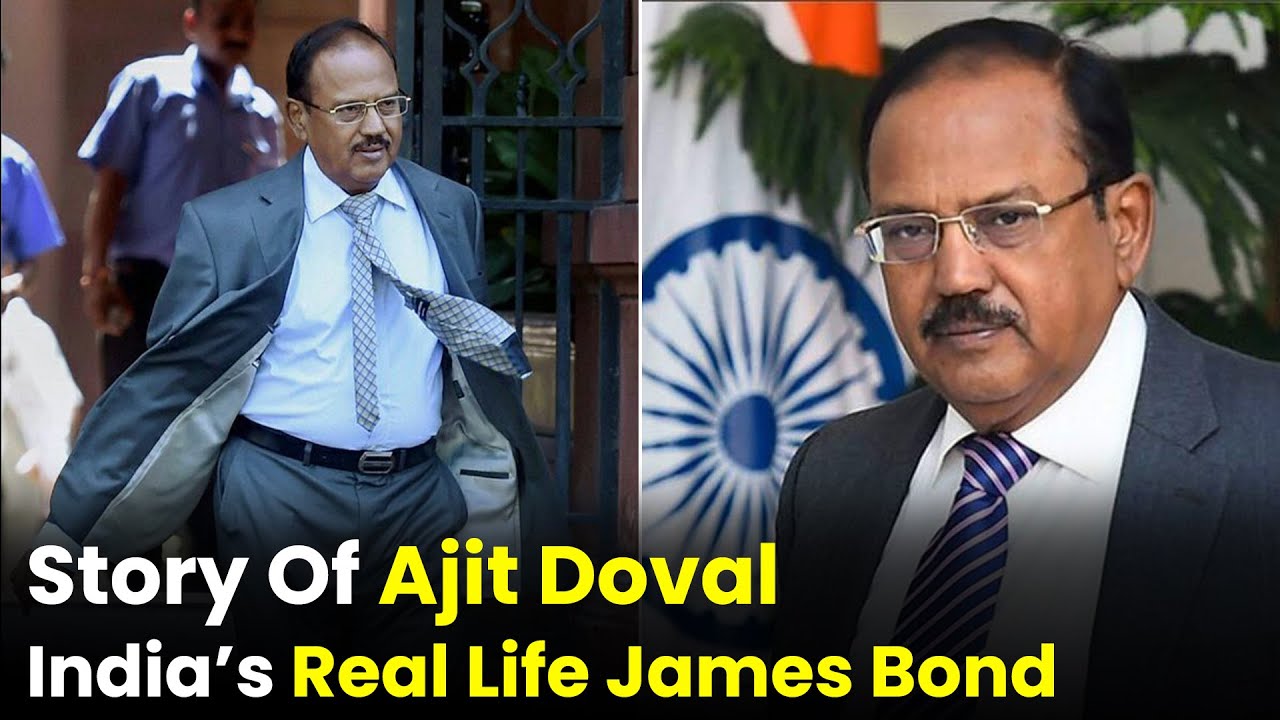
At 80 and still serving…yes, at an age when most government employees would have long since retired, leaving a lifetime of experience for the next generation, India’s National Security Advisor, Ajit Doval, remains at the center of the country’s strategic decision-making. For decades, Doval has been called India’s “James Bond,” a man who moves with ease through the dark corridors of intelligence and diplomacy, quietly but with clear authority formulating the country’s security policy.
But why hasn’t India removed him from his job despite his age? The answer lies in the combination of experience and today’s security challenges.
Experience that cannot be replaced
Ajit Doval’s career is unlike any other serving officer. His understanding of intelligence, diplomacy, and national security stems from years of direct operational experience, which cannot easily be replaced by younger officers, no matter how capable they are.
From counter-insurgency to high-stakes negotiations, his career has been marked by actions that shaped India’s security doctrines. Today, his guidance is based on the lessons learned from decades spent in the dark, analyzing both internal and external threats.
Former R&AW chief Amarjit Singh Dulat described him as very important. Dulat said, “Ajit Doval is very close to PM Modi, and if you look around, no one can replace him. I have often thought about it: if Doval is not there, who can replace him? So, in my view, there is no one right now, except someone I don’t know. He is very important.” He further added, “We are friends and have worked together. He is very kind and one of our best officers. He has a very special relationship with PM Modi. He has worked in all phases, both under the UPA government and now under the NDA government.”
The Rise of a Policeman
Born in 1945 in Pauri Garhwal, formerly part of the United Provinces (now Uttarakhand), Ajit Doval grew up in Ajmer, Rajasthan, into a family with a strong military background; his father was an officer in the Indian Army. After graduating from Agra University, he joined the Indian Police Service in the Kerala cadre in 1968.
His early years were spent in some of the country’s toughest theaters. He worked extensively on anti-insurgency operations in Mizoram and Punjab, including several undercover assignments that later became part of intelligence folklore. His role in negotiating the release of passengers from Indian Airlines Flight IC-814, hijacked in Kandahar in 1999, is one of his most high-profile assignments.
Doval became Director of the Intelligence Bureau in 2004 before retiring in 2005. Even after retirement, he continued to participate in the national security debate through commentaries and lectures. He returned to the government in 2014 when Prime Minister Narendra Modi appointed him as India’s fifth National Security Advisor.
On June 3, 2019, when Doval was reappointed, the role of NSA was elevated from the rank of Minister of State to that of a Cabinet Minister, a unique move since the post was created in 1998. This upgrade is said to reflect his strategic dialogue with several major powers, including talks between the Special Representatives of India and China on the border dispute.
His journey from an IPS officer to one of India’s most powerful national security officials explains why his presence is still seen as an asset rather than a relic of the past.
Speaking about Doval, Air Vice Marshal (Retd.), Kapil Kak, Founding Additional Director of the Centre for Air Power Studies, New Delhi, said, “Mr. Doval and I have known each other for almost 35 years, and he is a friend of mine. The post he holds is an appointment that coordinates all activities of all ministries to achieve national security goals and national interest objectives. We know that, as per Government of India rules, the official retirement age for all Government of India employees is 60 years. Mr. Doval is already 80 years old, but he is not a Government of India employee. He is an advisor to the Prime Minister, and one could say he is one of the PM’s most trusted advisors. In my opinion, it seems that Prime Minister Modi will retain him as long as he is PM.”
The Doval Doctrine
Doval’s enduring importance lies in his unique approach to national security, often informally referred to as the “Doval Doctrine.”
Why Retirement Is Unlikely
For now, the question is not when Ajit Doval will retire, but whether India can afford his absence. His long career is marked by a combination of common sense, wisdom, and strategy that is difficult to replace. His continued presence reflects necessity, not sentiment.