
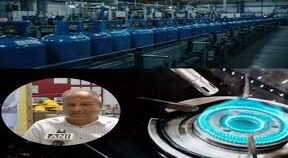
India’s heavy reliance on imported fuel for cooking may soon receive a small but significant respite. Scientists at the CSIR-National Chemical Laboratory (CSIR-NCL) in Pune have developed an indigenous technology to produce Dimethyl Ether (DME). This is a clean-burning fuel that can be utilized as an alternative to Liquefied Petroleum Gas (LPG). According to a press release issued by the institute, this technology could help reduce the country’s dependence on imported LPG while simultaneously boosting India’s efforts to achieve self-reliance in the energy sector.
A Clean Fuel Alternative Emerges
The research team at CSIR-NCL has developed a patented technology for the production of Dimethyl Ether. This is a synthetic fuel known for its clean-burning properties. Scientists state that DME could serve as a sustainable alternative to LPG and also support the government’s broader ‘Atmanirbhar Bharat’ (Self-Reliant India) objective of strengthening domestic energy capabilities.
Energy security remains a major concern for India, as the country imports over 80 percent of its fossil fuel requirements. In recent years, disruptions in global supply chains have led to a rise in LPG prices, impacting numerous households—particularly those utilizing subsidized cylinders under the ‘Pradhan Mantri Ujjwala Yojana’.
Why the Focus on DME?
Dimethyl Ether is considered a clean fuel because it emits significantly lower levels of soot, nitrogen oxides (NOx), sulfur oxides (SOx), and particulate matter compared to many traditional fuels. Furthermore, scientists note that its thermal efficiency is comparable to that of LPG.
The Bureau of Indian Standards has already established the necessary standards and regulations for its usage. Under the standard IS 18698:2024, up to 20 percent DME can be blended with LPG for domestic, commercial, and industrial use.
Experts state that blending up to 8 percent DME with LPG will not require any modifications to the existing LPG infrastructure—such as cylinders, regulators, hoses, or burners. This means that households will be able to utilize this blended fuel without making any changes to their current kitchen setups.
A Hefty Import Bill, Significant Potential for Savings
In 2024, India imported approximately 21 million tonnes of LPG. Scientists estimate that if just 8 percent of this import volume were replaced by DME, it could result in annual foreign exchange savings of approximately ₹9,500 crore. For families covered under the Ujjwala Scheme, the scale of demand is substantial. To substitute a portion of the LPG supply for the 105 million connections under this scheme, a DME production capacity of approximately 1,300 tonnes per day would be required.
Beyond the Kitchen: Other Applications of DME
Apart from being a cooking fuel, DME also has numerous industrial and commercial applications. It can serve as an automotive fuel and as a propellant in aerosol products, where it can replace ozone-depleting chlorofluorocarbons (CFCs).
This compound also functions as a chemical intermediate in the production of lower olefins, dimethyl sulfate, and methyl acetate.
How the Technology Works
Developed at CSIR-NCL, this technology converts methanol into dimethyl ether using a highly active and cost-effective catalyst. The research team was led by Thirumalaivesamy Raja, who integrated catalyst chemistry with reactor engineering to create an efficient production process. According to a press release from the institute, this system enables the production of DME at a pressure of approximately 10 atmospheres. This makes it possible to fill the fuel directly into LPG cylinders while keeping operational costs relatively low.
This process has already been successfully scaled up to a pilot capacity of 250 kilograms per day.
Burner Prototype Tested
To make this technology more practical for everyday use, scientists at CSIR-NCL have also designed a patented burner prototype. This burner can operate in a flexible mode—ranging from 100 percent LPG to 100 percent DME, as well as on any mixture thereof.
The efficiency of this prototype has been tested at the LPG Equipment Research Centre located in Bengaluru.
The Next Step: Moving Towards an Industrial Scale
The institute is now preparing to set up an industrial demonstration plant capable of producing 2.5 tons of DME per day. The scientists aim to establish this facility within the next six to nine months, in collaboration with a process engineering partner.
If this demonstration proves successful, it could pave the way for the establishment of commercial plants capable of producing between 50 and 100 tons per day.
CSIR-NCL has also expressed interest in partnering with major oil Public Sector Undertakings (PSUs) and bio-energy companies to implement this technology on a large scale.
Scientists state that the widespread adoption of DME could help India reduce its reliance on LPG imports, enhance energy security, and advance towards a cleaner energy mix.