
Although AI gained popularity after the emergence of OpenAI in 2018, its origins date back to the 1920s. The history of AI can be divided into several phases—spanning from the foundation laid in the 1920s to the formal emergence of AI in 1956, which set the stage for today’s technology.
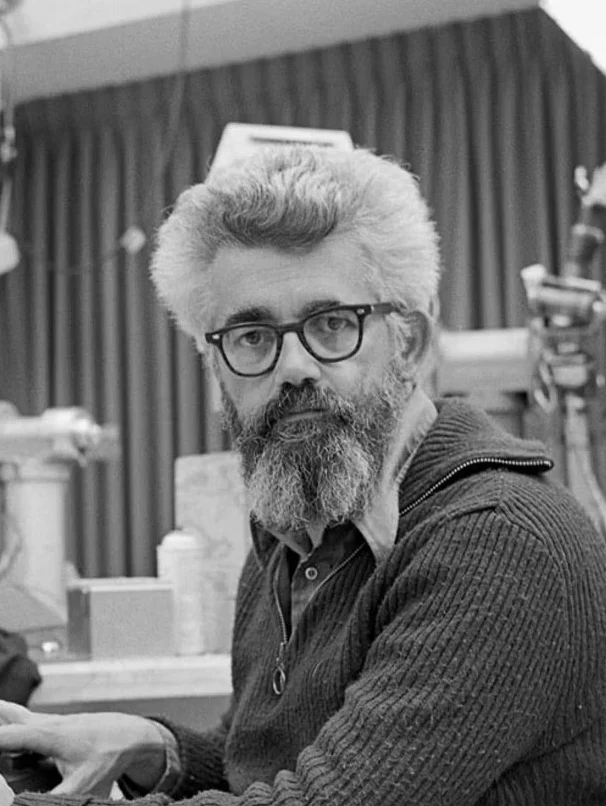
American computer scientist John McCarthy is considered the “father of Artificial Intelligence.” His groundbreaking work laid the foundation for the development of AI and established it as a distinct field within computer science.
What is Artificial Intelligence?
Artificial Intelligence (AI) is a technology that enables computers to think and solve problems like humans—whether operating independently or in conjunction with other technologies.
It began in the early 20th century when the concept of artificial humans first emerged, and researchers started contemplating the possibility of creating artificial intelligence—or what they termed an “artificial brain.”
The term “artificial people” was first used in 1921 by Czech playwright Karel Čapek in his science-fiction play R.U.R. (Rossum’s Universal Robots), which introduced the concept of artificial beings acting as robots.
What would happen if AI became smarter than humans and we could no longer control it?
AI solved a problem that had stumped brilliant mathematicians for decades.
Why is John McCarthy considered the father of Artificial Intelligence?
John McCarthy is known as the “father of AI” due to his significant contributions to the field:
In 1955, he coined the term “Artificial Intelligence” and gave the field a formal identity. In 1956, McCarthy, along with Marvin Minsky, Claude Shannon, and Nathaniel Rochester, organized the historic Dartmouth Conference, which is considered the official inception of AI as a field of study.
He developed the LISP programming language, which remained the most widely used language in AI research for decades. Father of Artificial Intelligence
John McCarthy (1927–2011) was one of the most influential scientists in the history of computer science. Born in Boston, USA, McCarthy made significant contributions not only to AI but also to the fields of mathematics and computing. His belief that computers could mimic human thought opened the door to new possibilities in technology.
He spent a large part of his career as a professor at Stanford University, mentoring several generations of computer scientists. McCarthy also worked at MIT and contributed to the development of early ‘time-sharing systems,’ which made computing more accessible to the general public.
Contributions
He introduced concepts such as common-sense reasoning, machine learning, and the logical representation of knowledge.
Due to his visionary thinking, John McCarthy is often compared to the great inventors of his time. His ideas inspired countless researchers and established him as a central figure in the field of AI.
John McCarthy’s contributions continue to influence modern AI today—whether in natural language processing, robotics, or machine learning. He received numerous honors for his work in AI, including the Turing Award (1971). The use of AI today in voice assistants, autonomous vehicles (driverless cars), and smart systems is all part of the dream first envisioned by McCarthy.