
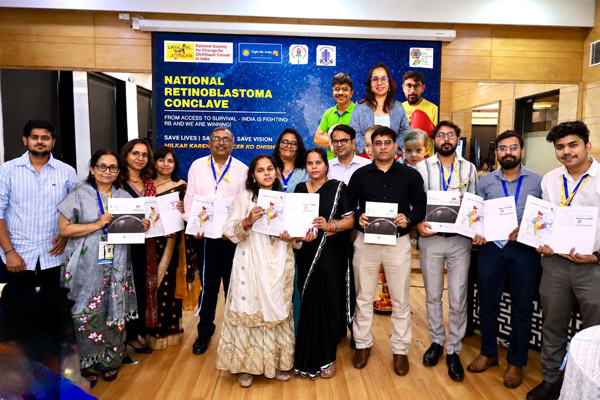
New Delhi: India has marked a major achievement in the fight against Retinoblastoma, a rare but curable childhood eye cancer, by significantly expanding access to treatment and care across the country. This milestone was celebrated during the National Retinoblastoma Conference held at the Constitution Club in New Delhi as part of International Retinoblastoma Week. The conference brought together doctors, researchers, cancer survivors, parents, policymakers, hospitals, and civil society organizations from across India.
The initiative, led by ‘Fight Retinoblastoma India’ and managed by CanKids…KidsCan since 2013, has spent the last decade building a strong collaborative network for retinoblastoma care. Today, more than 90 treatment centers across India are connected through this network, improving early diagnosis, referrals, access to treatment, and long-term care support for affected children and their families.
The conference theme, “From Access to Survival – India Fights RB, and We Are Winning,” reflected the country’s growing success in establishing a patient-centric and collaborative healthcare model. Retinoblastoma mainly affects young children, and experts emphasized that early detection and timely treatment are essential to save lives and preserve vision.
Dr. M. Srinivas, Member (Health) at NITI Aayog, praised the initiative in a recorded address and called it “an exceptional model of stakeholder collaboration for patient-centric healthcare.” He noted that India’s approach demonstrates how collaboration can improve childhood cancer care even in resource-constrained settings.
A major highlight of the conference was the publication of the journey of ‘Fight Retinoblastoma India’ in the Indian Journal of Ophthalmology under the title, “Fight Retinoblastoma India: A Decade of Collective Effort, Collaboration, and Patient-Centric Care.” The publication showcases India’s success in improving healthcare delivery through teamwork and shared expertise.
The conference also focused on the next goals for retinoblastoma care in India, including 100% financial protection for families, improved survival rates of 80–90%, stronger early screening systems, better referral networks, and wider access to advanced diagnostics and treatment facilities.
Experts highlighted the importance of Red Reflex Screening for early detection. Dr. Neelam Mohan of the Indian Academy of Pediatrics recommended making the screening part of routine child health check-ups and vaccination visits. Research presented by Dr. Amita Mahajan showed that collaborative treatment efforts across 21 centers involving 1,121 children helped reduce treatment abandonment rates to nearly 7%.
Cancer survivors and parents also shared inspiring stories of hope and recovery, emphasizing the importance of awareness, dignity, and continued support after treatment. Organizers reaffirmed their commitment to ensuring that every child with Retinoblastoma in India receives timely treatment, vision care, and a healthier future.