

In many homes and temples across India, the Shivling is one of the most recognizable spiritual symbols. It rests serenely in home shrines, roadside shrines, and grand temples alike, receiving daily offerings of water, milk, flowers, and Bel leaves. Yet, alongside the term Shivling, another term is frequently heard—one that holds even greater spiritual significance: the Jyotirlinga. While they may appear similar to the eye, their meanings and purposes differ vastly. Understanding this distinction reveals the nature of Shiva worship across India—whether in a simple home shrine or at the most powerful pilgrimage sites.
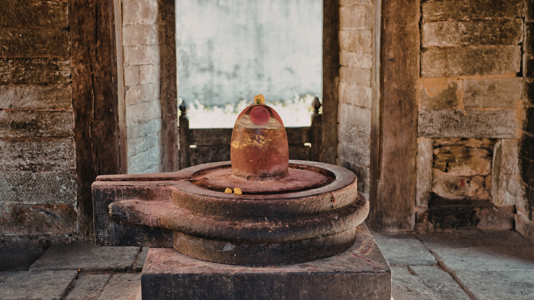
What the Shivling Symbolizes
The Shivling is a symbolic representation of Lord Shiva. It does not attempt to depict Him in human form; instead, it represents Shiva as pure cosmic energy—formless, eternal, and beyond the physical realm. Its smooth, pillar-like shape symbolizes the unchanging truth underlying all of creation, while the circular base—known as the Yoni—symbolizes Shakti, the creative feminine power. Together, they embody the balance between stability and dynamism, consciousness and creation.
A Shivling can be installed anywhere—in a temple, a home, a small village shrine, or even beneath a tree. Its power stems not from a specific location or mythological origin, but from the devotee’s faith. When one worships a Shivling, one connects with Shiva as an omnipresent force—not one confined to a single story, place, or form.
This is why millions of people across India perform Abhishek (ritual bathing) on the Shivling daily. Offering water, milk, honey, and sacred leaves is a way to honor Shiva’s presence. The Shivling is not merely an object for display; it is a medium for daily spiritual connection.
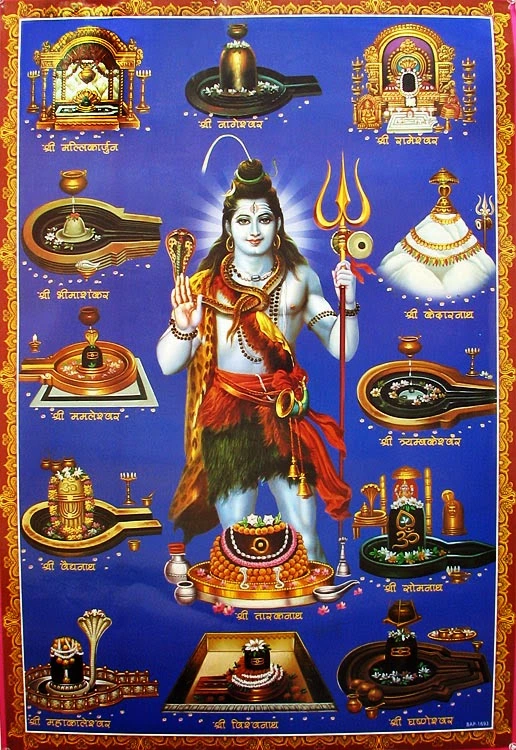
How the Jyotirlinga Differs
A Jyotirlinga is not simply a symbolic Shivling. It is believed that this is the place where Shiva manifested as a pillar of divine light, or ‘Jyoti’. According to ancient Shaivite texts, there was a moment in the cosmos when Shiva revealed Himself not in a human or physical form, but as an endless pillar of radiant light extending beyond both heaven and earth. That infinite light represented Shiva’s true and boundless nature. There are specific sites in India where this light is believed to have descended upon the earth. These sites are known as Jyotirlingas, a term meaning “Lingam of Light.” Traditionally, there are twelve Jyotirlingas in India, including renowned temples such as Kashi Vishwanath, Somnath, Kedarnath, Mahakaleshwar, and Rameshwaram.
Each Jyotirlinga is associated with a unique legend in which Shiva manifested as this light to resolve a conflict, dispel ego, or restore balance. The significance of these sites stems not from their consecration by humans, but from their divine manifestation. A Jyotirlinga is considered to have appeared spontaneously—or Swayambhu—meaning it was not constructed by people but emerged through Shiva’s own will.
Symbol vs. Source
This is the key distinction. A Shivling is a symbol of Shiva’s presence, whereas a Jyotirlinga is regarded as the source of that presence.