
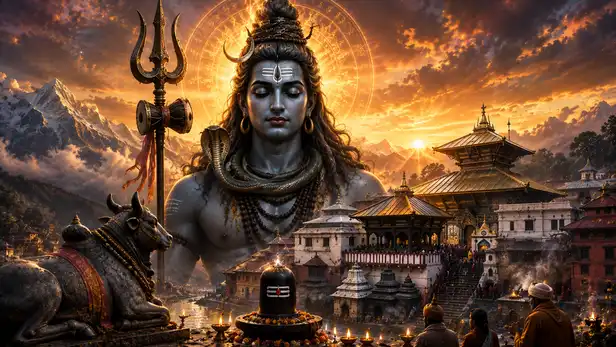
Among the countless forms of Lord Shiva worshipped in India and Nepal, Pashupatinath holds a unique and profound spiritual significance. Situated on the banks of the sacred Bagmati River in Kathmandu, Nepal, the Pashupatinath Temple is not only one of Shiva’s holiest pilgrimage sites but also one of the few places where He is worshipped in the form of a four-faced Swayambhu (self-manifested) Shivling. But how did Mahadev become Pashupatinath? And why is this temple located near a cremation ground? It imparts lessons on liberation from worldly attachments, compassion, and the eternal truth of life.
According to the Shiva Purana, the Lingam of Pashupatinath in Nepal possesses the power to fulfill all desires. The legend of Pashupatinath is recounted in the ninth chapter of the Koti-Rudra Samhita—alongside the glory of Kedareshwar (Kedarnath)—which also describes the Pandavas’ journey in search of Shiva.
The day Shiva chose silence over power
According to ancient Hindu tradition, Lord Shiva once withdrew from worldly responsibilities in search of supreme peace and meditation. He arrived at the serene banks of the Bagmati River and assumed the form of a beautiful deer. Hidden in the lap of nature, Mahadev remained away from the gaze of gods and humans. This story symbolizes that even the Supreme Lord values silence, inner peace, and liberation from worldly distractions. It reminds devotees that true peace is often found within oneself rather than in external achievements.
How the four-faced Shivling manifested
When the gods finally discovered Shiva’s hiding place, they requested Him to return. It is believed that they tried to pull Him back by grasping His horn. During this tug-of-war, the horn broke, fell to the earth, and split into four sacred fragments. It was from these very fragments that the Swayambhu Chaturmukh Shivling—the four-faced form of Lord Pashupatinath—manifested. Each face symbolizes the omnipresent nature of Shiva, reminding devotees that divine consciousness pervades every direction and transcends all boundaries.
Why is this temple situated near a cremation ground?
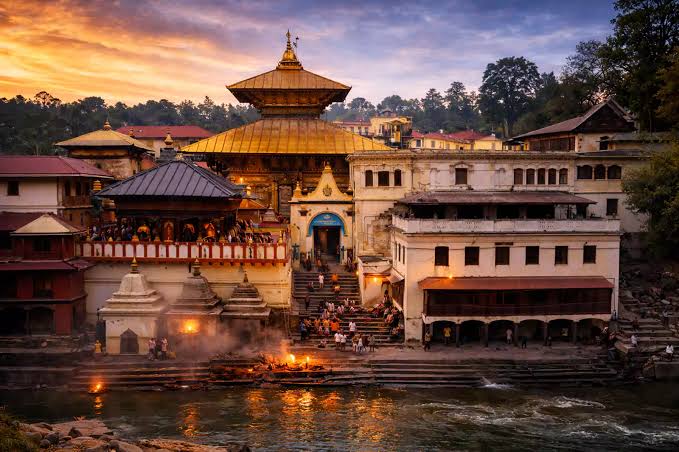
One of the most distinctive features of the Pashupatinath Temple is its location near the Arya Ghat cremation grounds on the banks of the Bagmati River. On one side, devotees offer prayers with reverence and devotion; on the other, funeral rites remind everyone of the impermanence of life. This sacred site illustrates one of the profound truths of Hinduism: birth and death are inseparable parts of existence. Lord Shiva remains the eternal witness, guiding every soul through both the beginning and the end with compassion and detachment.
Why is Shiva called Pashupatinath?
The name Pashupatinath means “Lord of all living beings.” The word ‘Pashu’ refers not merely to animals, but to every soul bound by worldly attachments, ignorance, and ego. ‘Nath’ signifies protector or lord. In this form, Lord Shiva is believed to liberate all beings from fear and attachment, guiding them toward Moksha (salvation). His compassion is not limited to humans alone; He embraces every form of life equally. This is why Pashupatinath is one of the most revered and beloved forms of Shiva.
How can one receive the blessings of Pashupatinath?
Not every devotee can travel to Nepal, especially during the holy month of Sawan. However, Hindu scriptures emphasize that true devotion matters more than physical location. You can offer water or milk to a Shivling at home or at a nearby temple and reverently chant “Om Namah Shivaya” or the Mahamrityunjaya Mantra. Spend a few moments in quiet meditation, praying for inner peace, wisdom, and liberation from fear. Devotion offered with a sincere heart reaches Mahadev, no matter where you are.
The Eternal Message of Pashupatinath
Life is fleeting, yet the soul’s journey continues beyond birth and death. Lord Shiva teaches that peace is attained through detachment, compassion, and surrender to the Divine. Worshipping near the cremation grounds reminds every devotee to remain conscious of life’s profound purpose and to grasp the significance of every moment. Ultimately, Mahadev remains the eternal refuge for every soul seeking liberation.